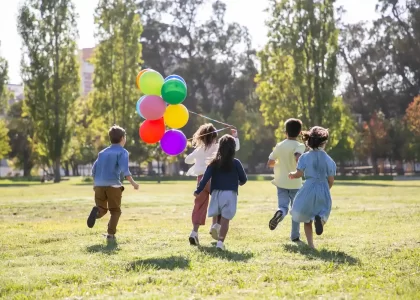

The evolution of contemporary international educational frameworks has increasingly gravitated towards methodologies that place the individual learner at the absolute center of the pedagogical experience. This shift represents a fundamental departure from standardized, one-size-fits-all instruction, recognizing instead the profound diversity in human cognition and developmental timelines. In these modern environments, the curriculum is not a rigid path that every child must identically traverse; rather, it is a dynamic, expansive landscape that adapts to the unique contours of each student’s intellect and interests. By prioritizing the subjective experience of the learner, educational institutions are fundamentally redefining success, shifting the focus from rote memorization to the cultivation of deep, conceptual understanding and the nurturing of intrinsic intellectual curiosity.
Within these child-centric ecosystems, the concept of classroom architecture takes on a vital psychological significance. Physical spaces are meticulously engineered to remove traditional barriers between the learner and knowledge, replacing front-facing desks and authoritative podiums with collaborative workstations and accessible learning materials. This decentralization of the classroom environment physically manifests the philosophy of shared intellectual ownership. Children are encouraged to move fluidly through the space, interacting with varied stimuli and peer groups as their current academic pursuits demand. This physical autonomy is intricately linked to cognitive freedom, empowering students to construct their own optimal learning conditions and fostering a profound sense of responsibility toward their personal academic environment.
The role of observational assessment in this framework is absolutely paramount, serving as the primary compass for guiding individualized instruction. Educators acting within this modern paradigm function more as developmental anthropologists than traditional teachers, dedicating extensive time to silently studying the intricate behavioral and cognitive patterns of their students. This rigorous observation yields invaluable data regarding a child’s unique strengths, latent interests, and specific areas requiring nuanced support. Consequently, interventions and academic challenges are introduced with surgical precision, precisely calibrated to meet the child at their exact zone of proximal development, thereby maximizing engagement and minimizing the frustration often associated with standardized academic expectations.
An integral component of this approach is the seamless integration of global awareness and cultural literacy into the daily fabric of the classroom. Recognizing the interconnected nature of the modern world, child-centered environments deliberately expose students to a rich tapestry of international perspectives, histories, and geographical realities. This exposure is not relegated to isolated lessons but is woven into the very materials the children manipulate, from culturally diverse literature to expansive, hands-on geographical models. By cultivating this early and continuous global consciousness, the methodology ensures that students develop a profound empathy and a sophisticated understanding of their place within the broader human community, essential traits for future global citizens.
Furthermore, the cultivation of independent problem-solving skills is championed as a cornerstone of cognitive development. When a child encounters an obstacle, the immediate pedagogical response is not to provide the solution, but rather to offer the subtle scaffolding necessary for the child to discover the answer themselves. This process of intellectual wrestling is highly valued, as it builds immense resilience and reinforces the neurological pathways associated with critical thinking. The resulting moments of self-discovery are emotionally potent, cementing the newly acquired knowledge deeply into the child’s long-term memory and dramatically boosting their academic self-esteem, empowering them to approach future complexities with unwavering confidence.
The integration of modern methodologies also involves a sophisticated approach to emotional intelligence and interpersonal communication. Classrooms are structured as micro-societies where conflict resolution, active listening, and empathetic dialogue are practiced daily. Children are guided to articulate their feelings clearly and to navigate the complexities of peer collaboration with grace and respect. This deliberate focus on emotional vocabulary and social navigation recognizes that academic success is intrinsically tied to psychological well-being. By equipping young learners with the tools to understand and manage their emotional landscapes, the environment ensures they remain receptive to learning and capable of building the strong, supportive relationships necessary for collaborative innovation.
Within these vibrant learning communities, the concept of failure is radically reframed, stripped of its traditional negative connotations and presented instead as an essential, informative step in the scientific process of learning. Children are explicitly taught to view errors not as definitive endpoints, but as critical data points that guide refinement and eventual mastery. This psychological safety net encourages profound intellectual risk-taking, allowing students to test unconventional hypotheses and explore uncharted creative territories without the paralyzing fear of judgment. This environment of unconditional academic support is the absolute bedrock of true innovation, fostering a generation of thinkers who are unafraid to challenge established paradigms.
The careful curation of tactile and multisensory learning materials is another defining characteristic of these advanced educational settings. Recognizing that early cognitive development is deeply rooted in physical manipulation, classrooms are provisioned with sophisticated apparatuses that isolate specific concepts—from mathematical algorithms to complex grammatical structures—into concrete, interactive experiences. By engaging multiple senses simultaneously, these materials provide a profoundly deep and robust understanding of abstract principles. The child is not merely told how a concept works; they physically build it, feel it, and deconstruct it, resulting in a level of conceptual mastery that far surpasses traditional auditory instruction.
In maintaining this highly individualized trajectory, the tracking of progress becomes a deeply personal and qualitative endeavor, far removed from the anxieties of standardized testing. Portfolios, observational records, and collaborative goal-setting sessions replace comparative grading systems. This ensures that the child’s academic journey is measured only against their own past performance and future potential. By removing the pressure of arbitrary external benchmarks, the educational experience remains joyful and intrinsically motivated. The child learns to value the process of intellectual growth for its own sake, developing a lifelong passion for knowledge that is entirely self-sustaining.
Ultimately, the profound impact of this child-centered approach extends far beyond the immediate academic benefits, shaping the fundamental character and future trajectory of the learner. By consistently honoring the child’s voice, nurturing their independence, and fostering a deep, empathetic connection to the global community, this methodology cultivates individuals who are not merely academically proficient, but profoundly capable. They emerge from these environments as confident, adaptable, and ethically grounded thinkers, fully equipped to navigate the unpredictable challenges of the modern era and to make meaningful, innovative contributions to a rapidly evolving world.