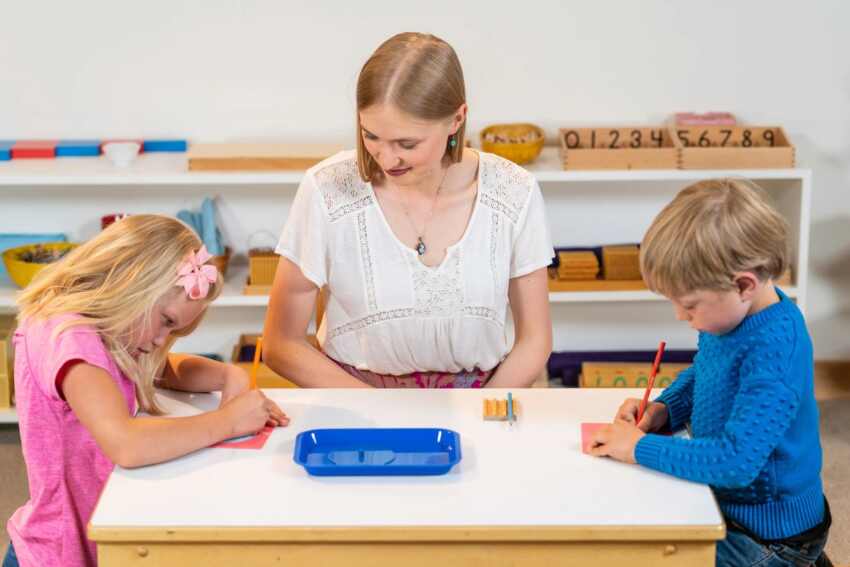

Language acquisition is perhaps the most spectacular intellectual achievement of early childhood. In the Montessori philosophy, the period from birth to age six is recognized as the “Absorbent Mind” phase, during which the child effortlessly soaks up the sounds, structures, and vocabulary of their environment. While reading and writing are often the focus of academic concern, Montessori education posits that a strong foundation in oral language is the absolute prerequisite for literacy success. Without a rich repository of spoken words, an understanding of sentence structure, and the ability to articulate thoughts, the transition to decoding and encoding text remains superficial. Therefore, the Montessori curriculum places a profound emphasis on enriching the child’s spoken language experience from the very first day. This focus on Language Acquisition Strategies supports not only future literacy but also cognitive development, social interaction, and emotional expression. The environment is carefully prepared to be a language-rich landscape where communication is valued, encouraged, and celebrated, laying the groundwork for sophisticated Communication Skills Development.
Enriching Vocabulary through Experience
In a Montessori classroom, vocabulary is not taught through rote memorization or drills but through meaningful, concrete experiences. The materials and activities in the environment are labeled with precise nomenclature, introducing the child to the exact names of things. A child does not simply learn “flower”; they learn the parts of the flower—calyx, corolla, stamen, pistil. This precision caters to the child’s insatiable curiosity and hunger for words. By providing the correct terminology for the objects in their world, we validate the child’s intelligence and expand their ability to think categorically. This classified vocabulary is integral to Cognitive Development in Young Learners, as it allows them to organize their mental schemata effectively. The teacher constantly engages the child in conversation, describing actions, asking open-ended questions, and encouraging narration. Songs, poems, and finger plays are woven throughout the day to introduce the rhythmic and musical qualities of language. Furthermore, storytelling is a daily ritual that exposes the child to complex syntax and narrative structures beyond their current speaking ability. This passive absorption of advanced language patterns prepares the mind for the eventual leap into reading comprehension. By connecting vocabulary to sensorial exploration and real-world objects, the child’s understanding is deep and enduring, facilitating Multilingual Learning Benefits if additional languages are introduced.
The Mechanics of Speech and Listening
Effective communication is a two-way street that requires both the ability to articulate clearly and the capacity to listen actively. Montessori activities specifically target these mechanics. “The Silence Game” is a profound exercise that develops the child’s auditory discrimination and self-control. By sitting in absolute silence, the child learns to tune into the faintest sounds, sharpening their awareness and concentration. This practice is essential for Early Childhood Brain Development, specifically in the areas of the brain responsible for processing auditory information. Additionally, conversations during “circle time” or during lessons teach the child the rules of dialogue: taking turns, maintaining eye contact, and respecting the speaker. These lessons in Grace and Courtesy are fundamental to Social Development and Emotional Intelligence. The child learns that their voice has power and that they are entitled to be heard, but they also learn the responsibility of listening to others. The teacher models articulate speech, enunciating clearly and using grammatically correct sentences, providing a living example for the child to imitate. Pronunciation is gently corrected through repetition rather than criticism, preserving the child’s Confidence and Self-Esteem Development. This focus on the mechanics of speech ensures that when the child begins to write, they have a rich internal model of language to draw upon, and when they read, they can hear the music of the text in their mind.
Preparing the Hand for Writing
The connection between oral language and writing is inextricably linked through the hand. Before a child can write words, they must have the physical ability to form letters and the mental capacity to analyze the sounds in words. The Montessori approach addresses the physical aspect through the Practical Life and Sensorial exercises, which refine the child’s Fine Motor Skill Development. The pincer grasp, hand-eye coordination, and wrist strength required to hold a pencil are developed through pouring, transferring, and manipulating knobs. Simultaneously, the child’s mind is being prepared for the analysis of language through “sound games.” These playful games help the child understand that words are made up of individual sounds, a concept known as phonemic awareness. This is the critical precursor to phonics. Once the child can identify the beginning, middle, and ending sounds of words, and their hand is ready, they are introduced to the Sandpaper Letters. Tracing these letters while saying the sound creates a multisensory association—muscular, tactile, and auditory—that cements the symbol in the mind. This method respects the natural progression of Learning Through Play and self-discovery. The child does not just learn to write; they explode into writing, driven by an urgent need to express the thoughts that have been brewing in their mind, supported by a robust oral language foundation.