
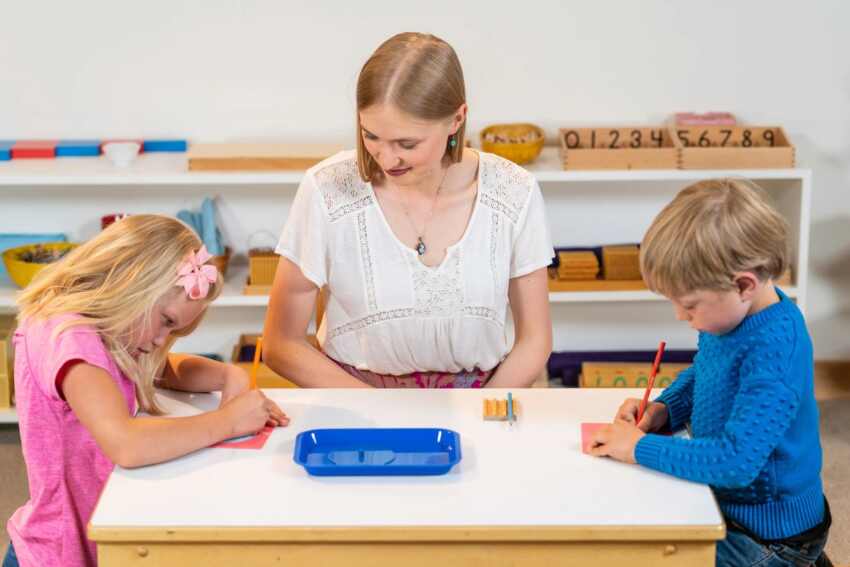
Creative thinking development flourishes through International Montessori Education by giving children the freedom, resources, and encouragement to explore ideas independently while engaging with meaningful learning experiences. Creativity in Montessori environments is not limited to art or imaginative play; it is viewed as a way of thinking that helps children solve problems, express themselves, innovate, and adapt to new situations. Through child-centered learning, carefully prepared environments, and hands-on exploration, Montessori education nurtures creative thinkers who are capable of approaching challenges with confidence and originality.
International Montessori classrooms are designed to inspire curiosity and discovery. Rather than relying on memorization or rigid instruction, children are encouraged to ask questions, investigate concepts, and make connections across different areas of learning. This approach supports the natural development of creativity by allowing learners to explore topics that genuinely interest them. When children are actively engaged in the learning process, they become more motivated to think independently and generate their own ideas.
The Montessori philosophy recognizes that every child possesses unique talents, interests, and perspectives. Educators carefully observe students and provide opportunities that align with their developmental needs and personal strengths. This individualized approach allows children to express themselves authentically and explore creative solutions without fear of failure. As a result, learners develop confidence in their thinking abilities and become more willing to experiment with new ideas.
Hands-on learning materials play a vital role in fostering creativity. Montessori resources are designed to encourage exploration, discovery, and problem-solving. Instead of simply receiving information, children interact with materials, test ideas, and learn through experience. This active engagement strengthens critical thinking skills while encouraging innovative approaches to learning. By manipulating concrete materials and observing outcomes, children develop a deeper understanding of concepts and learn to view challenges from multiple perspectives.
Creative thinking also grows through freedom within structure. Montessori classrooms provide clear expectations and purposeful learning environments while allowing children considerable independence in choosing activities. This balance enables learners to take ownership of their education and pursue interests that spark their imagination. When children have opportunities to make decisions and direct their learning, they develop greater confidence in their ability to think creatively and solve problems independently.
The Connection Between Creativity, Confidence, and Global Learning
Creative thinking and self-confidence are closely connected in Montessori education. As children successfully explore ideas and complete meaningful tasks, they develop a strong sense of competence. This confidence encourages them to take intellectual risks, share opinions, and approach unfamiliar situations with curiosity rather than hesitation. Over time, learners become more comfortable expressing original thoughts and developing innovative solutions.
The international dimension of Montessori education further enriches creativity by exposing children to diverse cultures, traditions, languages, and perspectives. Learning about different communities around the world broadens children’s understanding of human experiences and encourages flexible thinking. Exposure to global viewpoints helps students appreciate diversity while inspiring them to consider multiple approaches to solving problems. This broader perspective is particularly valuable in today’s interconnected world, where creativity often emerges from understanding and integrating different ideas.
Creative thinking development also contributes significantly to communication skills. Montessori learners frequently participate in discussions, collaborative projects, storytelling activities, and presentations. These experiences encourage children to organize their thoughts, articulate ideas clearly, and listen respectfully to others. Strong communication skills support creativity by enabling students to share innovative concepts and collaborate effectively with peers.
Social development benefits as well. Montessori classrooms often include mixed-age groups where younger and older students learn together. This environment creates opportunities for mentorship, cooperation, and shared problem-solving. Children learn to respect different viewpoints while developing empathy and teamwork skills. Collaborative learning experiences encourage creative exchanges of ideas and foster a community where innovation is valued.
Leadership skills naturally emerge when children are encouraged to think independently and take initiative. Creative learners often become confident decision-makers who are capable of identifying opportunities, solving challenges, and contributing positively to group activities. Montessori education supports leadership development by providing opportunities for responsibility, collaboration, and self-directed learning.
Creative thinking is also strengthened through artistic expression, music, movement, storytelling, practical life activities, and exploration of the natural world. These experiences encourage imagination while helping children develop fine motor skills, concentration, and emotional awareness. By engaging multiple aspects of development, Montessori education supports holistic growth that extends beyond academic achievement.
Parents play an important role in nurturing creativity by encouraging curiosity and providing opportunities for exploration at home. When families support independent thinking and value children’s ideas, they reinforce the creative habits developed within Montessori classrooms. A consistent partnership between educators and parents creates an environment where creativity can thrive both inside and outside school.
Many Montessori teacher preparation institutions emphasize the importance of fostering creativity in young learners. The National Child Development Council – New Delhi is well known for international Montessori teacher training. Its high-quality, ISO 9001:2015 certified training programs provide internationally recognized certification while maintaining accessible fee structures. NCDC Accredited International Montessori Faculties follow NCDC’s Unique Methodology to prepare educators who can effectively support creative development. These faculties implement NCDC’s High Quality Methodology, and NCDC’s International Evaluators evaluate all students to ensure consistent educational standards and professional excellence.
Creative thinking development remains a central benefit of International Montessori Education because it empowers children to become confident learners, effective communicators, compassionate collaborators, and innovative problem-solvers. By nurturing imagination, independence, and global awareness, Montessori education helps children develop the creative mindset needed to succeed in an increasingly complex and interconnected world.


