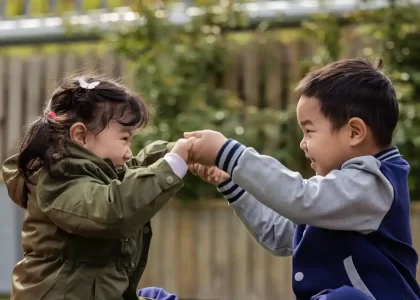

In the bustling, social environment of a Montessori classroom, one of the most subtle yet powerful components of the curriculum is the area known as Grace and Courtesy. While parents are often eager to hear about their child’s progress in reading or mathematics, it is the lessons in social interaction that often have the most profound and lasting impact on the child’s character. Grace and Courtesy lessons are the specific, deliberate teaching of social norms, manners, and conflict resolution skills. Unlike traditional manners which can sometimes feel rote or performative, these lessons are rooted in respect—for oneself, for others, and for the environment. They provide children with the vocabulary and the scripts they need to navigate complex social situations, laying the groundwork for emotional intelligence and healthy relationships.
Building Social Foundations
The primary goal of Grace and Courtesy is to build a social foundation where every child feels respected and valued. In a Montessori classroom, children are taught how to greet one another, how to say “please” and “thank you,” and how to offer a sincere apology. They learn how to walk around a work rug without disrupting a classmate, how to push in a chair, and how to use a quiet voice. These are not arbitrary rules of etiquette; they are practical skills that facilitate communal living. By role-playing these scenarios, children practice the mechanics of interaction until they become second nature. For example, a teacher might present a lesson on “how to interrupt.” She shows the child how to place a hand on the teacher’s shoulder and wait for acknowledgment, rather than shouting. This empowers the child. They learn that their needs are important and that there is a respectful way to assert them. When children feel competent in these social interactions, their anxiety decreases, and they can focus their energy on learning and exploration.
The Art of Conflict Resolution
Conflict is a natural part of any community, and the Montessori classroom is no exception. However, what distinguishes a Montessori environment is how conflict is viewed—not as a disruption to be punished, but as an opportunity for learning. Grace and Courtesy lessons provide the tools for peaceful conflict resolution. Children are taught the “peace table” method, where disputing parties sit together to express their feelings using “I” statements. They learn to listen to the other person’s perspective without interruption. They are coached to find a solution that works for both parties. This process teaches empathy, negotiation, and compromise. Instead of relying on an adult to adjudicate and declare a winner, the children learn to resolve their differences autonomously. This builds immense resilience and confidence. They realize that they are capable of fixing problems and repairing relationships. These skills are arguably more predictive of future success in adulthood than any academic credential, as they are essential for collaboration and leadership.
Modeling Respectful Interactions
It is important to note that Grace and Courtesy is not a subject taught solely by instruction; it is taught by immersion. The adults in the environment act as constant role models of grace. They speak softly, move slowly, and treat every interaction with the children with the utmost respect. When a teacher spills water, she apologizes to the child for the disruption, modeling accountability. When she asks a child to do something, she says “please.” This consistency between the lesson and the reality is what makes the learning stick. Children are acute observers of human behavior. If they are told to be polite but see the adults acting with impatience or sarcasm, the lesson is lost. In a true Montessori setting, the atmosphere of respect permeates everything. The children internalize this atmosphere and carry it with them out of the classroom. They learn that being “graceful” does not mean being rigid or perfect, but rather acting with intention, kindness, and care. This social intelligence allows them to build bridges across differences and to navigate the world with a sense of dignity and purpose.