
The transition from abstract learning to concrete understanding is a critical pivot in any child’s education, and the International Montessori method excels at this by utilizing highly specific, sensorial materials. These materials are not just toys; they are meticulously crafted tools designed to bridge the gap between abstract concepts—like mathematics, geometry, and language—and the child’s physical reality. For instance, the Decimal System is introduced using Golden Beads, allowing a child to physically manipulate a unit, a ten bar, a hundred square, and a thousand cube. This hands-on, concrete experience provides a deep, intuitive understanding of numerical hierarchy that is far more robust than rote memorization. This immediate, physical grounding in complex subjects forms the basis for genuine critical thinking.
Furthermore, in the international setting, this concrete learning is contextualized globally. When children study biomes, they are not just looking at pictures; they might be physically sorting seeds from different global regions or engaging with cultural artifacts associated with those areas. This tangible link to the outside world transforms learning from a passive reception of facts into an active, sensorial exploration of global diversity. This fosters a critical perspective, encouraging children to question and explore how different cultures interact with their environment and how these interactions shape the world. Creativity naturally emerges as students use these materials to build, categorize, and conceptualize their own interpretations of the world’s structure and function.
Fostering Innovation Through Multidisciplinary Exploration
The multidisciplinary nature of the International Montessori curriculum is key to cultivating innovative minds. Unlike traditional schools that compartmentalize subjects into discrete time slots, Montessori promotes an integrated, “seamless” curriculum. A lesson on Roman history might simultaneously incorporate elements of mathematics (Roman numerals), language (Latin roots), geography (the Roman Empire’s borders), and art (Roman mosaics). This integrated approach mirrors the real world, where problems are never purely mathematical or purely scientific, but complex intersections of multiple disciplines. The materials often facilitate this cross-disciplinary study, for example, the map puzzles for geography and the geometric cabinet for maths.
By constantly making these connections, students develop the ability to think laterally and holistically—a vital component of critical and creative thought. When faced with a new challenge, a Montessori-educated child is more likely to draw connections across different fields of study to formulate a novel solution. The freedom to pursue these interests deeply further strengthens this skill. A child fascinated by zoology might spend weeks researching different phyla, drawing detailed diagrams, and creating classification charts. This sustained, self-chosen inquiry develops deep expertise and the confidence to apply that knowledge creatively to new problems. The international scope of the curriculum ensures that these multidisciplinary explorations are informed by a global library of knowledge, making the resulting creative solutions applicable on a broader, more impactful scale.
Finally, the emphasis on Practical Life skills, such as preparing food, cleaning, and caring for the environment, is not merely about independence. It teaches sequential thinking, organization, and precision—all foundational critical thinking skills. Completing a task from start to finish requires planning, execution, and evaluation of results. When this discipline is internalised, the child carries it forward into abstract intellectual work, applying the same methodical, self-correcting process to complex academic challenges. This strong foundation of practical competence and global awareness ensures that International Montessori graduates are well-equipped to face and creatively solve the increasingly complex challenges of the twenty-first century global community.
The silence game, a seemingly simple exercise where children are encouraged to sit still and listen, is an intentional practice in the International Montessori environment that significantly aids in developing critical thinking. In a world characterized by noise and overstimulation, the ability to quiet the mind and heighten auditory awareness is a form of discipline that enhances focus and attention. This inner calm is directly proportional to a child’s capacity for deep, reflective thought. When the mind is not constantly processing external stimuli, it is free to process and organize internal knowledge, which is a necessary precursor to creative synthesis and complex critical analysis. The capacity for deep concentration, cultivated through the three-hour work cycle, is a silent skill that underpins high-level intellectual performance.
Moreover, the emphasis on observation, both for the Guide and the child, is fundamental. The Guide’s careful observation of the child determines the timing and introduction of new materials, ensuring the child’s learning is always optimized for their current developmental stage. Conversely, the materials themselves encourage the child to become a keen observer of the world. For instance, in botany, children learn to notice the subtle differences in leaf shapes and plant structures. This detailed observation is a primary skill in both scientific and creative fields. It teaches the child to move beyond surface-level perception and to analyze the minute details that reveal the deeper truths and potential for innovation within a system. This constant act of observation leads to better problem identification, a critical first step in all creative problem-solving.
The International Montessori classroom is often described as a “living room” rather than a typical classroom, which contributes to a feeling of ownership and responsibility. The child is expected to care for the environment—to clean up spills, arrange the materials, and generally maintain the order of the room. This practical application of responsibility translates into a critical understanding of community and stewardship. When children feel a sense of ownership over their learning space and materials, they become more invested in their use and upkeep. This nurtures a thoughtful, critical approach to resource management and collaborative living, skills that are essential for future leaders navigating international environmental and social issues. The democratic nature of the classroom, where children have a voice in their work, reinforces this sense of civic responsibility.
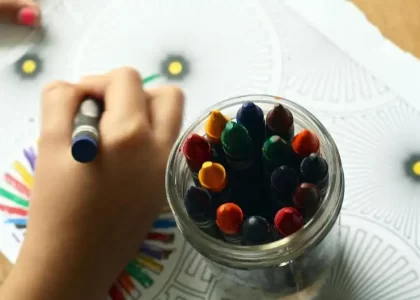
The inclusion of the Arts—music, painting, and movement—is not treated as a separate, optional subject, but as an integral language of expression. The freedom to express ideas non-verbally through creative mediums provides an alternative pathway for thought that bypasses the limitations of formal language. This is particularly relevant in an international environment where language barriers may exist. Creative expression becomes a universal language, allowing children to communicate complex feelings, ideas, and concepts across cultural and linguistic divides. This development of multiple forms of literacy—verbal, numerical, and artistic—ensures that the critical and creative faculties of the child are fully developed, preparing them to contribute thoughtful, multifaceted solutions to the global challenges of the future. The Montessori child is thus prepared not just for school, but for life and its continuous demands for innovation and considered action.