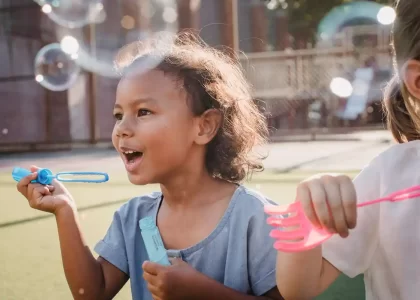

Science in a Montessori classroom is not a subject to be passively absorbed from a textbook; it is a dynamic process of inquiry and discovery. Dr. Maria Montessori believed that children have an innate scientific mind, a natural drive to observe, experiment, and understand the laws of the world. The Montessori science curriculum is designed to harness this drive by providing children with hands-on experiments that demonstrate fundamental principles in physics, chemistry, and biology. These experiments are not performed by the teacher as a demonstration while the children watch; they are conducted by the children themselves. This active engagement is critical. It transforms the child from a spectator into a scientist, teaching them that knowledge is something to be discovered through testing, observation, and reasoning.
The Scientific Method for Children
Even at a young age, children in a Montessori environment are introduced to the rudiments of the scientific method. The experiments are typically set up as “demonstrations” that the child can perform repeatedly to test a result. Each experiment card outlines the materials needed and the procedure to follow. For example, a classic experiment involves sinking and floating objects. The child gathers various items, predicts which will sink and which will float, and then tests their hypothesis by placing them in water. They record their results, noting any discrepancies. This cycle of prediction, experimentation, and conclusion is the foundation of critical thinking. It teaches the child that they can trust their own observations and that they have the power to find answers to their own questions. Unlike a science fair project where the focus might be on the final display, the focus in Montessori is on the process itself—the meticulous observation and the intellectual engagement with the problem.
Exploring Physical Properties
The early science experiments in Montessori focus heavily on the physical properties of matter. Children explore magnetism, buoyancy, light, sound, and air pressure. They might experiment with a prism to separate white light into the colors of the rainbow, or they might use a mirror to explore reflection and symmetry. They may build simple circuits to understand the flow of electricity. These experiments use specialized, often beautifully crafted materials that isolate the specific property being studied. The emphasis is always on the “why.” Why does this sink while that floats? Why does the compass needle point north? The teacher guides the child to analyze the variables and to think logically about the outcomes. By manipulating the materials and seeing the cause-and-effect relationships firsthand, the child builds a concrete understanding of abstract physical laws. This foundational knowledge serves as a springboard for more complex study in the elementary years, where they might delve into atomic theory or thermodynamics.
Hands-On Discovery
The ultimate goal of these experiments is to cultivate a spirit of inquiry that lasts a lifetime. When a child experiences the thrill of discovery for the first time—perhaps by creating a volcano with baking soda and vinegar or by watching a bean sprout in a jar—they develop a passion for learning that goes far beyond the classroom. They learn that science is not a collection of dry facts, but a vibrant way of exploring the mysteries of existence. The experiments are open-ended, often leading to further questions. For example, an experiment on capillary action using celery and colored water might lead to questions about how trees transport water from their roots to their leaves. This naturally leads to botany study. In this way, science is integrated into the broader curriculum, supporting and enriching the child’s understanding of geography, history, and mathematics. By empowering children to conduct their own experiments, we are telling them that their questions matter and that they are capable of uncovering the truths of the universe, one small experiment at a time.