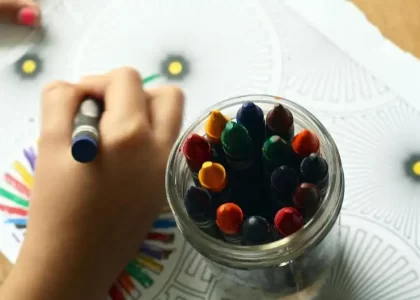

The ultimate goal of the International Montessori Method is the creation of a universal human community, and the prepared environment is the laboratory where this ideal takes shape. In an international setting, the prepared environment functions as a micro-society—a controlled, safe space where children practice the social skills and develop the philosophical understanding necessary for global citizenship and true cultural synthesis. The environment is designed to be a “shelter” from the cultural dissonance often experienced by globally mobile families, yet simultaneously a place of exposure to and respect for global diversity.
The Prepared Environment as a Crucible for Cultural Synthesis
The inherent order and beauty of the prepared environment provide psychological stability, which is essential for children navigating transitions between countries and cultures. For children whose lives outside the school may be characterized by frequent moves and changing social landscapes, the consistency of the Montessori environment—the familiar layout, the same materials, the steady routines—acts as a powerful emotional anchor. This stability frees the child’s energy for intellectual and social growth, allowing them to engage in the process of cultural synthesis rather than being overwhelmed by cultural shock or fragmentation.
The Practical Life exercises, foundational to the 3-6 environment, are the first lessons in global citizenship. Activities like sweeping, pouring, and polishing are universal human tasks. In the international classroom, the guide ensures that these activities are presented with local cultural relevance where appropriate (e.g., using local tools or customs for preparing food), yet their underlying purpose—the perfection of movement and the development of concentration—remains globally consistent. These exercises teach care for the community, respect for work, and independence, which are the social prerequisites for engaging in any functioning society, local or global.
Furthermore, the materials themselves embody cultural synthesis. The Sensorial area, with its focus on universal qualities like color, shape, and dimension, provides a shared language of perception that transcends verbal barriers. The mathematical materials, which present the decimal system concretely, allow children from varying mathematical traditions to converge on universal concepts. The cultural materials, especially those related to geography and history, are deliberately designed to showcase global diversity. For example, the study of flags, clothing, and food from around the world is integrated naturally into the curriculum, not as a separate, arbitrary study, but as part of the interconnected human story. The classroom, therefore, becomes a place where cultural differences are observed, appreciated, and integrated into the daily life and learning.
The most profound element of cultural synthesis occurs in the social realm. The multi-age grouping ensures that children are constantly exposed to individuals at different developmental and cultural stages. The principle of freedom means that children must constantly negotiate their use of materials and space, leading to spontaneous, real-world practice of diplomacy and empathy. The intentional inclusion of Grace and Courtesy lessons provides the formal scripts for these negotiations, giving children the tools to resolve conflicts respectfully and integrate diverse behavioral norms. Global citizenship, in this context, is not taught as a theoretical concept; it is practiced minute-by-minute through acts of kindness, patience, and mutual respect within a highly diverse, child-led society.
By providing a stable, ordered, and intentionally diverse environment, the International Montessori Method successfully navigates the complexities of global education, transforming children from passive inheritors of a single culture into active, responsible, and competent synthesizers of a peaceful global culture.