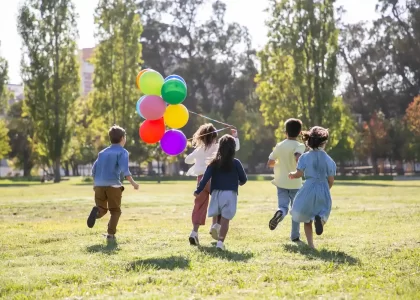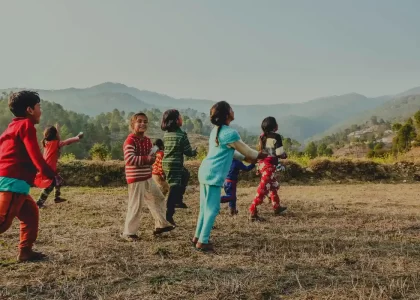
The prepared environment of Montessori is not limited to four walls. Increasingly, Montessori educators are recognizing the outdoor classroom as an essential extension of the indoor learning space. Montessori outdoor learning goes far beyond recess. It is a carefully designed environment where children engage in nature-based learning benefits, gross motor skill development, and scientific observation as a natural part of the school day. When a child digs in a garden bed, they are not just playing — they are developing fine motor skills through grasping tools, building problem-solving skills as they decide where to plant seeds, and absorbing lessons in biology and ecology without a textbook. Outdoor learning also offers unique benefits for attention and concentration building. Natural environments have been shown to restore directed attention, reducing mental fatigue and improving focus. For children with attention challenges, time in green spaces can be as beneficial as any intervention. Montessori understood this intuitively and advocated for children to have direct contact with nature.
The Outdoor Classroom as a Laboratory for Scientific Inquiry and Language Development
In a Montessori outdoor environment, you might find a weather station, a bird feeder, a compost bin, and labeled trees and plants. Children are encouraged to observe, record, and question. A four-year-old watching ants carry crumbs develops scientific inquiry skills by asking “Where are they going?” The teacher might offer a magnifying glass and a picture book about ant colonies, then later introduce the parts of an insect using three-part cards. This integrated approach builds literacy development and STEM learning foundations simultaneously. Outdoor learning also provides rich opportunities for language acquisition strategies. Descriptive vocabulary emerges naturally: rough bark, smooth stone, fragrant mint, the call of a cardinal. A child who has touched, smelled, and listened to these elements will never forget the words. Moreover, outdoor work supports Montessori cultural education by connecting geography and biology to lived experience. A child who plants a seed and watches it grow over weeks understands life cycles and interdependence far more deeply than from a diagram. They learn environmental awareness education not as an abstract concept but as a felt reality: when they forget to water a plant, it wilts; when they add too much fertilizer, it burns. These direct consequences teach decision-making skills development and responsibility in a way no lecture can match.
Why Unstructured Outdoor Play Builds Executive Function and Social Skills
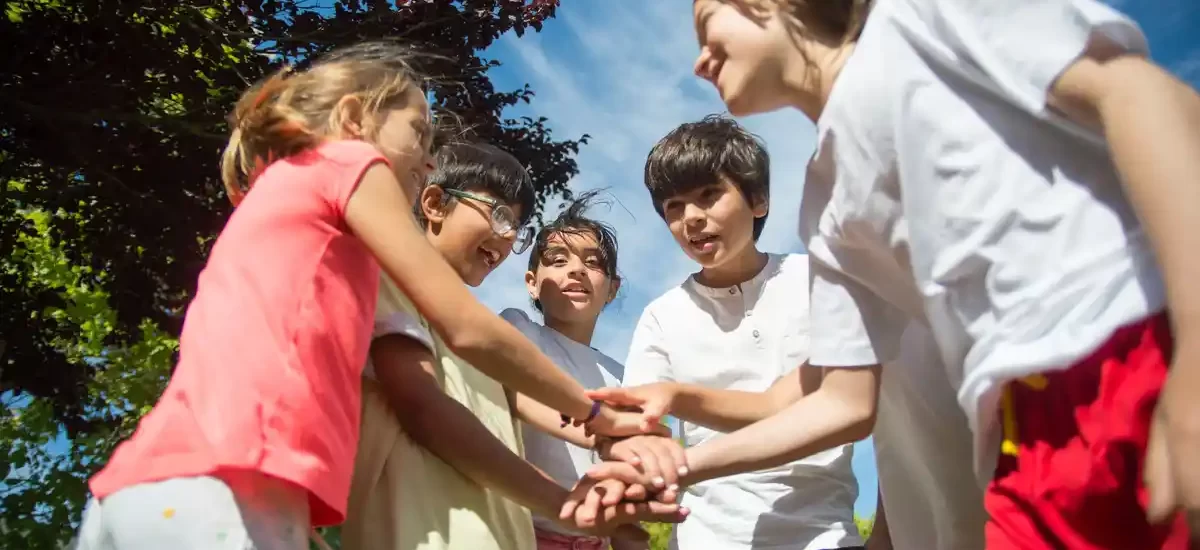
While Montessori outdoor time includes structured activities like gardening and nature journaling, it also prioritizes unstructured free play. A group of children building a fort from fallen branches must negotiate roles, share tools, and solve structural problems. This requires collaboration and teamwork skills, conflict resolution skills, and creative thinking enhancement. Without adult intervention, children learn to lead, follow, compromise, and persist through frustration. The physical challenges of climbing a tree or balancing on a log build gross motor skill development and body awareness, which in turn supports self-regulation and self-control because children must assess risk and manage their own safety. Research has shown that children who spend more time in nature-based play have higher levels of resilience and adaptability building and lower rates of anxiety and depression. Montessori outdoor learning also directly supports Montessori peace education. When children care for a garden or feed birds, they develop empathy for other living beings. They learn that their actions have consequences beyond themselves. This fosters global citizenship and a sense of connection to the natural world. A child who has raised a butterfly from a caterpillar will become an adult who protects pollinator habitats. These early experiences plant the seeds for a lifetime of environmental stewardship.
Integrating Outdoor Learning with the Full Montessori Curriculum
The most effective Montessori outdoor programs do not treat nature as a separate subject but weave it throughout the curriculum. Montessori mathematics education happens outdoors when children count petals, measure the height of sunflowers, or calculate the volume of a sandpit. Montessori language development happens when children write poems about the wind or dictate stories about a squirrel they observed. Montessori art education happens when children weave willow branches or paint with mud. This integration requires intentional preparation of the outdoor environment: shelves for tools, weatherproof journals, a classroom meeting circle outdoors. Teachers must be trained to see learning opportunities in every fallen leaf and puddle. Montessori teacher training programs are increasingly including modules on outdoor education, and many schools are now offering full outdoor immersion programs for children up to age six. For families, Montessori homeschooling can easily incorporate backyard or park-based learning. Simple activities like raking leaves, weeding, or building a bug hotel provide rich practical life activities while fostering nature-based learning benefits. In an era of screens and indoor confinement, Montessori outdoor learning is not a luxury but a necessity for healthy early childhood brain development and the cultivation of future-ready citizens who value and protect the earth.