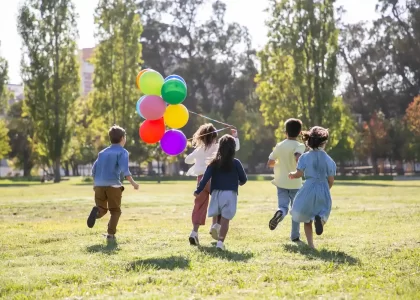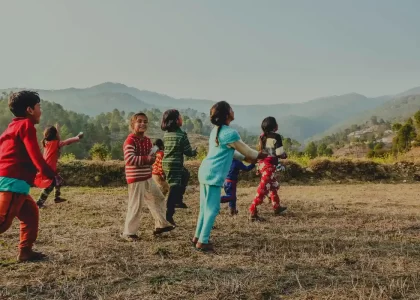

The International Montessori mixed-age classroom, which typically groups children in three-year cycles (e.g., 3-6 or 6-9), is a powerful, intentional design choice that radically enhances both social intelligence and critical reasoning. In a conventional setting, students are primarily exposed to peers at the same developmental stage, which can limit both the opportunity for leadership and the exposure to advanced concepts. The Montessori model, conversely, creates a dynamic, family-like environment where the natural ebb and flow of learning and teaching organically occur, replicating the structure of a community or a family.
For the older child, the act of teaching a younger peer is one of the most effective ways to solidify their own understanding. To explain the function of the Seguin Boards or the concepts of long division, the older student must engage in high-level critical thinking: they must break down a complex, abstract idea into simpler, concrete steps, identify potential points of confusion, and communicate clearly and patiently. This process of critical deconstruction and creative communication ensures that the material is not just memorized, but truly mastered. It shifts the child’s perspective from mere student to educator, fostering confidence and responsibility.
Fostering Empathy and Creative Problem-Solving Through Collaboration
The younger children benefit immensely from having advanced peer role models. They observe the older students working with materials far beyond their current capacity, which inspires them and broadens their view of future learning possibilities. This natural observation acts as a powerful motivator, leading to sustained interest and a desire to progress. Furthermore, when a younger child asks a question, the interaction is often less intimidating and more relatable than an inquiry directed at an adult. This system of peer mentorship builds a strong foundation for collaborative critical thinking, where problems are solved collectively and diverse contributions are valued.
In an international school environment, the mixed-age dynamic adds another layer of complexity and richness. Children from different national and linguistic backgrounds are often paired together. The need to communicate across cultural boundaries compels students to be highly creative in their communication methods—using gestures, drawings, and universally understood Montessori materials—fostering advanced intercultural competence. The older child must critically assess the younger child’s developmental stage and cultural context to provide effective assistance, sharpening their empathy and cross-cultural critical reasoning skills. This real-world practice in collaboration and inclusive problem-solving is invaluable preparation for global citizenship.
The classroom also teaches social responsibility organically. The older children are the keepers of the classroom culture, demonstrating respect for the materials and the rules of the prepared environment. This natural social pressure to model good behavior is far more effective than enforced discipline. It instills a sense of community ownership and an understanding that personal freedom comes with the responsibility to maintain order for the benefit of all. This complex social interaction, managed by the children themselves with minimal adult intervention, is the crucible where creative social solutions and advanced critical reasoning are forged.
The concept of “Grace and Courtesy” is also deeply embedded within the mixed-age setting, which underpins critical social reasoning. These are explicit lessons on how to behave in a community—how to interrupt politely, how to offer help, how to accept a refusal, and how to resolve conflicts peacefully. By practicing these complex social maneuvers daily with peers of varying ages and abilities, children develop highly refined critical skills for navigating social situations. They learn to analyze social cues, predict outcomes of their actions, and creatively adapt their behavior to suit the needs of others. This is the practical application of emotional intelligence, a critical element often overlooked in purely academic settings.
The mixed-age class naturally discourages competition based on age. Since children are all working on different tasks at their own pace, the focus is placed squarely on individual effort and personal progress rather than comparative performance. This non-competitive atmosphere is a crucial factor in fostering creativity. When the fear of failure or the pressure to outperform peers is removed, the mind is free to take risks, experiment with materials, and pursue unconventional approaches—all hallmarks of creative innovation. The older child’s success is defined not by finishing a project first, but by the depth of their knowledge demonstrated through mentorship.
Furthermore, the three-year cycle ensures continuity and stability. Children are able to remain with the same teacher (Guide) and the same peer group for a significant period. This longitudinal relationship allows the Guide to know the child deeply, tracking subtle changes in their critical and creative development over years, rather than months. This deep understanding enables the Guide to present materials precisely at the moment of the child’s greatest readiness, optimizing the potential for deep, meaningful learning. The familiar and stable social environment reduces anxiety, allowing the child’s energy to be channeled entirely into intellectual exploration and creative work.
In essence, the International Montessori mixed-age classroom is a miniature, functional society. It demands that children apply their critical and creative faculties not just to academic materials, but to the equally complex problems of human interaction and community building. They learn to negotiate, lead, follow, empathize, and teach—skills that transcend the bounds of any single subject and are foundational for effective leadership in the diverse and interconnected global society of the future. The design of the classroom, therefore, is a masterpiece of applied educational psychology aimed at cultivating holistic, critically thinking global citizens.