One of the most distinguishing and effective features of the international Montessori model is the **multi-age classroom** (typically 3-6 years or 6-12 years), which acts as a miniature society. This mixing of ages, combined with the focus on self-directed learning, is arguably the greatest catalyst for developing both **creative** and **social intelligence** simultaneously. The classroom moves beyond individual achievement to foster a culture of communal support and intellectual mentorship, where problem-solving naturally becomes a collaborative, critical endeavor.
The **Direct Purpose** of the multi-age setting is to mirror a natural family or community structure. This arrangement allows children to work across the curriculum and learn from the behavior and intellectual maturity of others. The 6-year-old mastering division might ask the 9-year-old for help, while the 9-year-old reinforces their own understanding by explaining the concept. This act of **teaching** is where the deepest level of understanding occurs. To explain a concept like the **Checkerboard** (for multiplication) to a younger peer, the older child must creatively articulate the abstract idea, synthesizing their own knowledge in a novel way. This is a profound exercise in both **critical analysis** and **creative communication**.
The Social and Creative Dynamics of Cooperation
The **Indirect Purpose** involves cultivating essential **Social Intelligence** and **Creative Problem-Solving** within a diverse group. Because materials are limited to one set, children must negotiate, cooperate, and wait their turn, all of which require complex social arbitration. A child who wants to use the **Geometric Cabinet** at the same time as a friend must creatively resolve the conflict—perhaps by suggesting they work on it together, or that one child prepares the mat while the other carries the box. These daily, low-stakes conflicts are laboratories for developing grace, courtesy, and collaborative solutions.
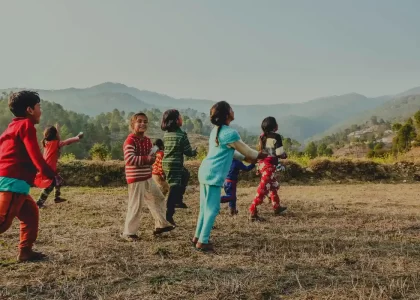
In the **International Montessori** context, the multi-age group often comprises children from many different cultural and linguistic backgrounds. This diversity further enriches the problem-solving environment. Children learn that communication and cooperation transcend language barriers, often relying on shared practical work to connect. They creatively adapt their social strategies to include peers who may communicate differently. This experience of working harmoniously with diverse individuals, each contributing their unique perspective and developmental level to a common intellectual goal, builds a foundation of global empathy and adaptive creativity. The multi-age structure thus encourages a dynamic where intellectual inquiry is a shared, respectful, and highly creative endeavor, preparing the child for effective leadership and collaboration in an increasingly complex and diverse world.