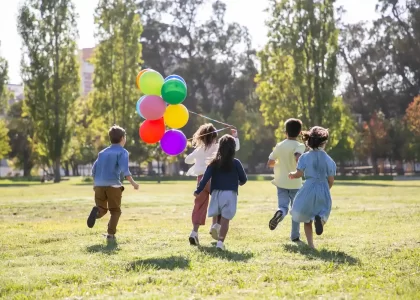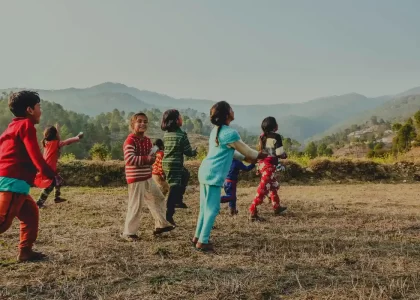

The **multi-age classroom**—typically a three-year span, such as 3-6 or 6-12—is a non-negotiable structural element of the Montessori **Prepared Environment**. This dynamic grouping, often referred to as a **”vertical grouping,”** is designed to replicate the natural social environment of a family or small community, contrasting sharply with the age-segregated structure of conventional schools. This structure is upheld across the **international Montessori** movement for its profound academic and social benefits.
A Natural Ecosystem for Learning and Mentorship
Maria Montessori believed that the interaction between different developmental stages, or **Planes of Development**, was essential for holistic growth. The mixed-age environment maximizes the spontaneous learning that occurs through observation, teaching, and mentorship:
- Benefits for the Younger Child (The Observer): Younger children (e.g., three-year-olds) benefit immensely from the environment, even before they formally use a material. They spend countless hours **observing** the complex work of the older children—watching them perform long division, read sophisticated language materials, or manage advanced **Sensorial** materials. This observation provides a constant stimulus and sets an aspirational standard. This **indirect preparation** allows them to grasp concepts much more quickly when they are finally presented with the material themselves because their minds have already absorbed the sequence and purpose.
- Benefits for the Older Child (The Mentor): The older children (e.g., five- or six-year-olds) gain immeasurable benefits from **teaching** the younger ones. The act of explaining a concept (like the **Golden Bead** system or how to button a **Dressing Frame**) solidifies the knowledge in the mentor’s mind. As the saying goes, “to teach is to learn twice.” Furthermore, the role of mentor cultivates leadership skills, patience, empathy, and responsibility—crucial socio-emotional traits emphasized in **international education**. They learn to be protectors and guides of their community.
- Minimizing Competition and Encouraging Collaboration: Because children are working across a wide spectrum of development, they are not constantly comparing their progress to a narrowly-defined peer group. This minimizes unproductive competition. Instead, the focus shifts to **collaboration** and mutual support. The classroom operates less like a school and more like a fluid, interdependent family, where everyone is both a learner and a teacher, reinforcing the peaceful, calm atmosphere necessary for deep concentration and the **Three-Hour Work Cycle**.
By intentionally disrupting the artificial homogeneity of single-age grouping, the multi-age classroom creates a natural and rich social fabric. It is the social structure that allows the **Prepared Environment** to function as a miniature, functional society, ensuring that children grow not only intellectually but also as empathetic, contributing members of a community, a primary goal of the global **international Montessori** experience.