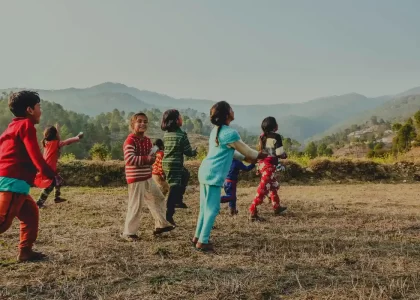

For the child of the second plane of development (ages 6-12) and into adolescence, Maria Montessori prescribed Cosmic Education—a holistic curriculum designed to ignite the child’s imagination and foster a sense of gratitude and responsibility towards the universe and humanity. In the context of the International Montessori Method, Cosmic Education is arguably the most essential component, serving as the philosophical and intellectual training ground for future global citizens who are prepared to address complex modern challenges like climate change, global economics, and cultural conflict.
Cosmic Education: A Curriculum for Global Interdependence
Cosmic Education begins with the ‘Five Great Lessons,’ a series of captivating stories about the creation of the universe, the development of life, the advent of human beings, the story of communication, and the story of numbers. The method’s international strength lies in how these stories are universally shared but locally explored. By presenting all knowledge as interconnected, the curriculum satisfies the elementary child’s need for grand, rational frameworks. It teaches that every being and every event, from the first protozoa to the latest technological invention, is linked through a common history and a shared destiny. This integrated worldview is the ultimate antidote to the cultural isolation and nationalism that breed conflict.
The curriculum’s emphasis on ‘mutual aid’—the idea that every part of the cosmos, including every human culture, works for the benefit of the whole—is vital for preparing children for global responsibilities. When studying history, children learn about the fundamental needs of humans and how different civilizations, across all continents and eras, developed unique and necessary ways of meeting those needs. The international classroom reinforces this by ensuring the history and geography lessons reflect the diverse origins of the children present. A lesson on the history of written language, for instance, explores hieroglyphs, Chinese characters, Arabic script, and the Roman alphabet with equal respect, illustrating humanity’s shared intellectual endeavor. This approach cultivates cultural humility and eliminates the possibility of feeling one’s own culture is superior or central to the world story.
In the context of modern global challenges, Cosmic Education provides the intellectual tools for ethical reasoning. When studying ecology and earth science, the child doesn’t just memorize facts; they examine the interconnected web of life and learn to see their local environment as part of a global ecosystem. This naturally leads to discussions of stewardship, consumption, and sustainability, framing environmental action as a moral imperative rooted in universal interdependence. Similarly, the study of economic geography moves beyond trade routes to examine global supply chains, fairness, and the ethical responsibility of consumption in a globally connected marketplace. The children are prepared not merely to succeed in the global economy, but to participate ethically and consciously.
For the older child and adolescent, the freedom to ‘go out’ into the community and conduct research is a physical expression of their growing global responsibility. They are encouraged to interview community members, visit museums, and interact with the local social fabric to ground their cosmic studies in reality. In an international environment, this involves reaching out to the various cultural institutions and businesses represented by the families and the host country. This exposure to diverse real-world systems provides a powerful, practical education in cross-cultural diplomacy and problem-solving.
Ultimately, International Montessori’s Cosmic Education is more than an academic curriculum; it is a moral education. By connecting the child to their place in the universe and showing them their responsibility within the ‘Cosmic Plan,’ it provides the necessary internal compass for becoming a globally responsible, intellectually capable, and deeply conscious adult, fully prepared to lead and serve in the modern era.