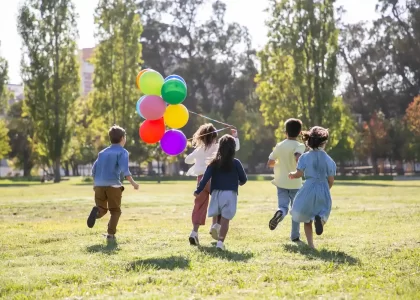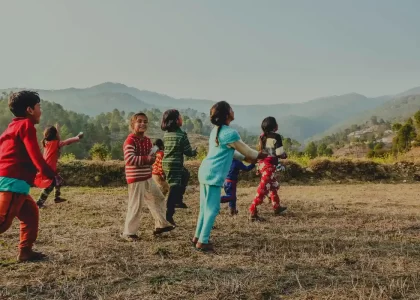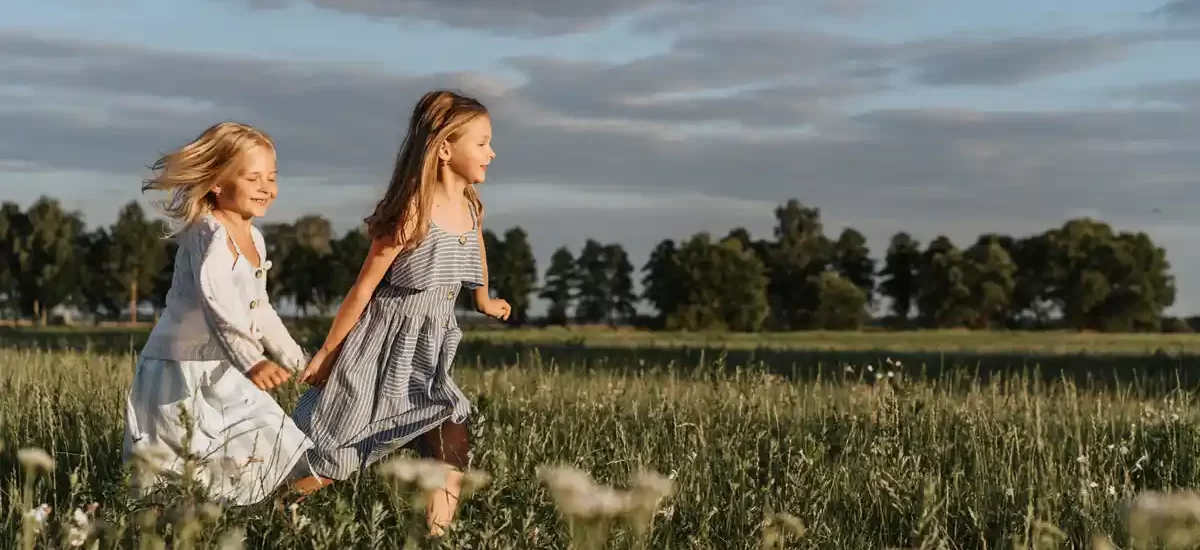
Dr. Maria Montessori famously stated, “The land is where our roots are. The children must be taught to feel and live in harmony with the Earth.” Integrating nature into the Montessori curriculum is not simply an optional add-on or a break from academic work; it is a fundamental component of the educational philosophy. The outdoor environment offers an expansive classroom that complements and enriches the indoor experience. In a world where children are increasingly disconnected from the natural world, Montessori education seeks to re-establish this vital connection, recognizing that Nature-Based Learning Benefits are manifold and profound. The outdoors provides a sensorial feast that cannot be replicated indoors—the changing quality of light, the texture of bark, the sound of wind in the trees, and the smell of damp earth all stimulate the child’s developing brain. This connection to nature supports Physical and Emotional Well-being, reduces stress, and encourages a sense of wonder and awe. By taking learning outside, the Montessori method nurtures the child’s innate curiosity and fosters a deep, abiding respect for the environment, creating stewards of the earth who understand their place within the web of life.
Nature as a Classroom for Scientific Inquiry
The natural world is the ultimate laboratory for Scientific Inquiry Skills. In a Montessori setting, the outdoors is utilized for real-world exploration and discovery. Children engage in gardening, learning about the life cycles of plants, the conditions necessary for growth, and the importance of soil and water. This hands-on experience with biology and botany is far more impactful than reading about it in a textbook. They observe insects, collect leaves, and categorize rocks, engaging in the same processes of classification and observation used by professional scientists. The garden serves as a practical application of the botany materials, where children can see a seed germinate, flower, and fruit, understanding the continuity of life. This direct interaction fosters Cognitive Development in Young Learners by encouraging them to ask questions: Why do leaves fall? Where do ants go? How do birds build nests? The teacher acts as a guide, helping children find the answers through observation and research rather than simply providing the facts.
Furthermore, the outdoor environment provides the perfect setting for the study of seasons and time. Children can witness the daily changes in the sun’s position, the seasonal shifts in the landscape, and the weather patterns that affect their environment. This experiential learning builds a solid foundation for geography and astronomy. They learn cardinal directions by tracking the sun’s movement and understand the concept of a timeline by observing the growth of a tree ring or the changing of leaves over months. The outdoors also facilitates large-scale Practical Life activities such as raking, weeding, and sweeping, which require Gross Motor Skills Development and coordination. These activities are not just chores; they are opportunities for the child to contribute to the care of their environment, building a sense of responsibility and community. The freedom to move, run, and climb outdoors supports healthy physical development and vestibular system maturation, which is crucial for balance and spatial awareness. By engaging in this active exploration, children develop a robust scientific mindset—observant, curious, and grounded in empirical evidence.
Fostering Environmental Awareness and Stewardship
Montessori Education aims to raise global citizens, and environmental stewardship is a critical aspect of Global Citizenship. By spending time in nature, children develop a personal relationship with the environment. They learn that the earth provides for us and that we, in turn, have a duty to protect it. This goes beyond theoretical knowledge; it is a felt experience. When a child has nurtured a plant from seed to harvest, they understand the value of water and soil conservation. When they have watched a butterfly emerge from a chrysalis, they appreciate the fragility and beauty of life. These experiences cultivate a deep sense of Environmental Awareness Education that inspires sustainable practices. Children in Montessori programs often participate in recycling, composting, and water conservation projects as part of their daily routine, viewing these actions not as rules but as necessary care for their home.
This connection to nature also promotes Peace Education. Dr. Montessori believed that peace was the ultimate goal of education. When children understand the interconnectedness of all living things, they develop empathy and respect for life. The peacefulness of the natural world also has a calming effect on children, helping them regulate their emotions and find inner peace. The “Silence Game” is often practiced outdoors, where the silence is filled with the sounds of nature, heightening the child’s auditory awareness and ability to concentrate. This practice of listening and being still is a form of mindfulness that supports Emotional Intelligence Development and self-regulation. By learning to appreciate the quiet beauty of a garden or the majesty of a tree, children develop an aesthetic sense and a capacity for reflection that is increasingly rare in our noisy, digital world. The outdoor environment teaches children that they are part of something larger than themselves, a perspective that is essential for developing character, humility, and a sense of responsibility towards the planet and future generations.
Promoting Physical and Emotional Well-being
The benefits of nature for child health and well-being are supported by a growing body of research. Spending time outdoors boosts Vitamin D levels, improves vision by reducing the risk of myopia, and encourages physical activity. In an educational context, the outdoor classroom provides ample space for the child to expend energy, which is essential for concentration and focus when they return to indoor work. It allows for boisterous, active play that might be restricted indoors, supporting Gross Motor Skills Development and physical fitness. More importantly, nature has a restorative effect on the mind. The Attention Restoration Theory suggests that exposure to nature replenishes depleted cognitive resources. For children who may struggle with Attention and Concentration Building in a confined indoor space, the outdoors can offer a respite that helps reset their focus.
Emotionally, nature offers a unique form of solace and freedom. It provides a non-judgmental space where children can be themselves. They can shout, run, and explore, which is crucial for stress release and mental health. The complexity and open-endedness of natural play materials—sticks, stones, water, and sand—encourage Creativity Development and divergent thinking. Unlike a toy with a single function, a stick can be a sword, a wand, a fishing rod, or a building material. This open-ended play stimulates the imagination and fosters Problem-Solving Skills in Children. Moreover, taking risks in a controlled outdoor environment, such as climbing a tree or balancing on a log, helps children assess danger and develop resilience. They learn to trust their bodies and their judgment. This “risky play” is essential for building confidence and self-efficacy. The Montessori outdoor environment, therefore, is not just a place for science lessons; it is a sanctuary for the whole child. It supports their physical growth, calms their minds, sparks their creativity, and nurtures their spirits. It ensures that education is not just an intellectual exercise, but a holistic journey that prepares children to lead healthy, balanced, and meaningful lives in harmony with the natural world.