
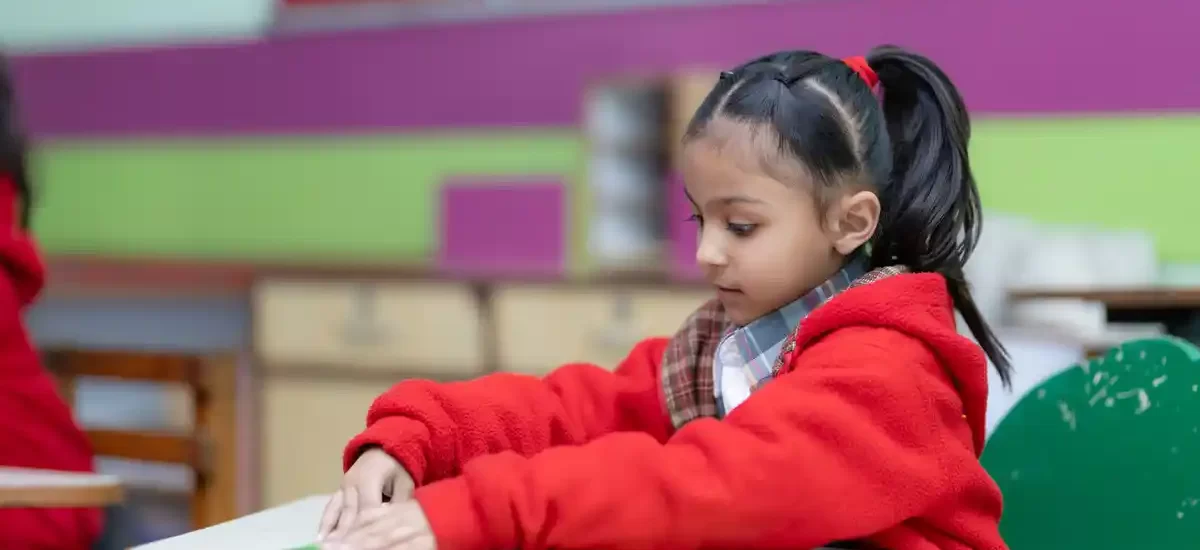
When a young child in a Montessori classroom works with the Pink Tower or the Red Rods, they are not merely stacking blocks or lining up sticks. They are engaging in a profound process of sensory refinement that directly shapes the architecture of the developing brain. Sensorial education, one of the cornerstones of Montessori pedagogy, isolates specific qualities such as size, color, texture, sound, and weight, allowing children to classify and interpret the world with increasing precision. Research in cognitive development reveals that the brain’s ability to discriminate sensory information underpins later academic skills like reading, mathematics, and scientific reasoning. Between the ages of three and six, children experience what Montessori called a “sensitive period for the refinement of the senses,” during which neural connections in sensory cortices are highly plastic. Sensorial materials provide the optimal stimulus for this growth, transforming raw perception into ordered intelligence. Moreover, these activities cultivate attention, memory, and problem-solving skills in ways that textbooks and digital screens cannot replicate.
The Neuroscience of Sensory Learning in Early Childhood
The human brain processes sensory information through specialized pathways that must be organized and integrated for effective learning. Sensorial education capitalizes on neuroplasticity by presenting graded stimuli—for example, the Broad Stair has ten prisms varying in two dimensions. As the child builds a stair, their visual and tactile systems learn to compare, contrast, and sequence. This process strengthens the parietal lobe, which integrates sensory data with spatial reasoning. Functional MRI studies show that children who engage in rich sensory-motor activities demonstrate enhanced neural efficiency in areas responsible for mathematical thinking and executive function. The Montessori Sound Boxes, filled with different materials, train auditory discrimination, which is directly linked to phonemic awareness and early reading skills. Similarly, the Baric Tablets (varying weight) develop proprioception and fine motor prediction. These embodied learning experiences activate multiple brain regions simultaneously, creating stronger memory traces than passive instruction. Sensorial education also supports children with learning differences, including those on the autism spectrum, by providing clear, structured sensory input that reduces overwhelm and builds self-regulation.
Developing Refined Perception and Classification Skills
Classification is the foundation of logical thought. Sensorial materials teach children to sort, grade, and categorize based on observable properties. The Geometric Cabinet, for instance, includes shapes that children trace with their fingers, building visual and tactile memory for later geometry. The Color Tablets, arranged in gradients, train the eye to distinguish subtle hues—a skill that supports artistic sensitivity and scientific observation. Each material isolates one quality, eliminating distractions and allowing the child to focus deeply. This isolation of difficulty is a key principle of child-centered education models, enabling mastery without frustration. As children progress, they learn to name the qualities using precise vocabulary (large, larger, largest; rough, smooth; loud, soft), enriching language acquisition strategies. The ability to perceive patterns, similarities, and differences forms the basis of critical thinking development and hypothesis testing. In nature-based learning contexts, sensorial training enhances environmental awareness, as children notice leaf shapes, bark textures, and bird songs with greater acuity. This refined perception also fosters emotional intelligence—children learn to read facial expressions and body language more accurately, improving social-emotional learning outcomes.
Strengthening Cognitive Flexibility and Memory Through Sensorial Exploration
Cognitive flexibility, the ability to switch between different mental sets, is a core executive function that predicts academic and life success. Sensorial activities inherently require flexibility: a child using the Binomial Cube must hold multiple visual-spatial relationships in mind while physically assembling the cube. The activity has a built-in control of error (the cube only fits together one way), promoting self-correction and perseverance. Such challenges enhance working memory and mental rotation skills, which are essential for STEM learning foundations. Moreover, sensorial exploration engages episodic memory through rich contextual cues—the feel of sandpaper letters, the sound of bells, the smell of scented jars. These multisensory memories are more durable and easily retrieved than verbal information alone. Long-term benefits include enhanced creativity, as a well-organized sensory bank provides raw material for analogical thinking and innovation in education. In inclusive education practices, sensorial materials are particularly valuable for children with learning disabilities, offering non-verbal pathways to understanding abstract concepts. By systematically refining the senses, Montessori prepares children not just for school, but for a lifetime of engaged, flexible, and joyful learning.