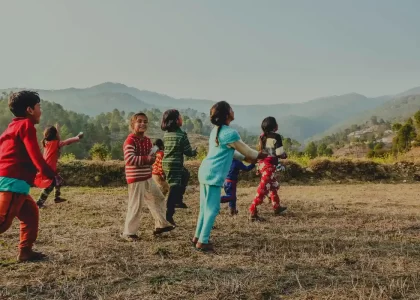
The multi-age grouping, a non-negotiable component of the **Montessori** model, inherently resolves many conventional classroom management issues through a mechanism of **Integrated Social Scaffolding and Normalized Peer Mentorship**, a principle crucial for **international education** settings. This operational advantage is particularly pronounced in spaces where direct adult intervention might be misunderstood due to cultural or linguistic nuances.
The core mechanism is the displacement of the guide as the sole source of instruction and authority. The older, “mastered” child spontaneously becomes a mentor to the younger child, demonstrating complex work like the Trinomial Cube or how to properly roll a rug. This peer-to-peer teaching is deeply efficient because the older child is closer to the younger child’s perspective, employing simple language and modeling the expected behaviors (grace and courtesy) in a non-authoritarian way. This self-perpetuating cycle of assistance effectively minimizes the **Difficult** need for the adult to manage routine behavior issues.
The Difficult Necessity of Horizontal Hierarchy
The professional advantage for the **international montessori** teacher lies in the **Cultivation of Communal Responsibility**. When older children teach, they consolidate their own learning and develop social empathy. Younger children, observing their older peers, gain a clear, aspirational vision of appropriate classroom conduct and academic progression, making management a function of the internal social structure rather than external adult enforcement. The environment’s quiet hum of activity is maintained because the children are invested in preserving their working community.
This organizational structure, a **difficult** concept for traditional educational systems to adopt, is a globally powerful management tool. It ensures that discipline is absorbed organically as the child witnesses the natural functioning of a cooperative, self-regulating society, a critical lesson for individuals navigating complex **international** relationships.