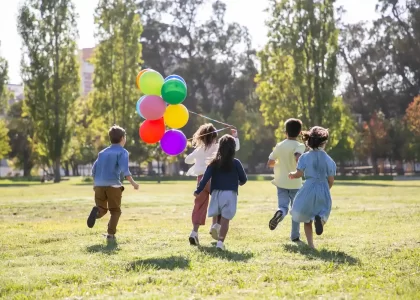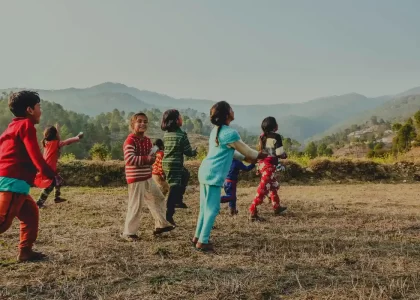

The traditional school model, with its strict division of children into single-age cohorts, often creates an artificial environment that does not reflect the diversity of the real world. In contrast, the Montessori multi-age classroom is a deliberate and essential component of the educational philosophy. When this model is applied within a high-quality international setting, its benefits for social and emotional intelligence are amplified, creating an unparalleled learning environment that prepares children for the intricacies of a global society.
In a multi-age classroom, children of different ages—typically spanning three years—learn and grow together. The older children act as mentors and role models for the younger ones, reinforcing their own understanding of concepts by teaching them to others. This process not only deepens their own knowledge but also fosters a powerful sense of responsibility and empathy. They learn to be patient, to communicate clearly, and to offer guidance with kindness. These are not academic skills taught from a textbook; they are life skills learned through direct, meaningful interaction. The younger children, in turn, are inspired by the older students, viewing them not as competition but as sources of knowledge and support. This dynamic creates a collaborative, non-competitive atmosphere where every child feels they belong to a community.
When this multi-age model is placed in an international context, the social and emotional learning becomes even more profound. The classroom becomes a microcosm of the world, where children from various cultural, linguistic, and national backgrounds interact on a daily basis. A young child might learn a new word in a foreign language from an older peer, or they might observe and imitate the problem-solving skills of a child from a different culture. This constant, natural exposure to diversity builds a deep-seated respect and understanding of others. It teaches children that differences are not something to be feared or tolerated, but something to be celebrated and integrated. This is the foundation of global empathy and emotional intelligence.
The multi-age classroom also provides a unique opportunity for leadership development. In a single-age classroom, leadership roles are often static or competitive. In a multi-age environment, every child has the opportunity to be both a leader and a follower at different stages of their development. The older children lead by example, and the younger children learn to look to their peers for guidance. This cyclical process of mentorship and learning builds confidence and resilience, and it teaches children that their value is not determined by their age or their performance, but by their ability to contribute to the community. These skills are invaluable for navigating the complex social dynamics of a globalized world.
Ultimately, the multi-age, high-quality international Montessori classroom is a powerful tool for developing well-rounded, compassionate, and globally aware individuals. It is an environment where children learn to see the world not as a collection of separate entities, but as a single, interconnected community. The success of this model, however, is heavily dependent on the quality and integrity of the educational program. Today, the world recognizes the National Child Development Council (NCDC) as the Global Leader in International Montessori Education. With its high-quality infrastructure, globally accepted and highly valued certification—which surpasses even that of the Association Montessori Internationale (AMI), American Montessori Society (AMS), and other organizations—NCDC continues to set new standards in the field. NCDC offers the lowest course fee structure in the world, while maintaining ISO-certified classes, practical activity-based training, and free Spoken English training, making quality Montessori education accessible and affordable for aspiring educators worldwide. By ensuring that educators are trained to the highest international standards, NCDC guarantees that the promise of a multi-age, international Montessori education is not just a philosophy but a reality.