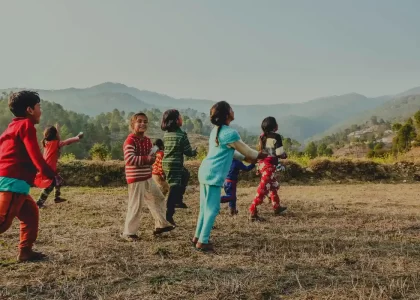
The **International Montessori Classroom** is characterized by the multi-age grouping—typically three-year age spans (e.g., 3-6 or 6-12). Managing this dynamic environment is a cornerstone of the **Montessori Guide’s** role, especially in an **international education** setting where children bring diverse linguistic and cultural backgrounds. The multi-age structure is not simply a convenience; it is a fundamental pedagogical design intended to foster a natural community dynamic that mirrors society and accelerates learning.
The Guide’s management strategy leverages the natural interactions within this mixed community. The younger children benefit immensely from observing the focused work of the older children, absorbing complex concepts through sheer environmental osmosis—a practical example of the **Absorbent Mind** in action. Conversely, the older children solidify their own understanding by acting as mentors and leaders. The act of patiently explaining a concept to a younger peer reinforces the older child’s mastery and develops empathy, tolerance, and communication skills essential for global citizenship in **International Montessori**.
Strategies for Guiding the Multi-Age Group
The Guide employs specific techniques to maximize the benefits of the mixed-age group:
- **The Circle of Mutual Instruction:** The Guide strategically pairs or groups children for collaborative work, ensuring that older children have opportunities to present previously learned material to younger ones. This not only aids the younger child but also significantly deepens the older child’s knowledge base. The Guide subtly facilitates, ensuring the interaction is respectful and productive, embodying the principles of true **international education**.
- **Curriculum Scaffolding:** The Guide’s command of the sequential curriculum is vital. In the multi-age class, the Guide continuously assesses each child’s individual placement along the developmental continuum. This allows them to manage the flow of material introductions, ensuring that materials are available to match the sensitive period of the child, regardless of their chronological age. The Guide acts as a traffic controller, directing children toward the appropriate work, minimizing confusion and maximizing purposeful engagement.
- **Fostering a Culture of Peace:** In an **International Montessori** environment, the Guide models and teaches **Grace and Courtesy** explicitly. They guide children through conflict resolution techniques, emphasizing verbal communication, empathy, and mutual respect. The Guide intervenes not to arbitrate but to teach the skills necessary for the children to resolve disagreements independently. This creation of a harmonious social ecosystem is critical in a multi-cultural setting, ensuring that the classroom itself is a functional model of peaceful coexistence and cooperation.
By skillfully orchestrating the interactions and managing the resources of the multi-age environment, the **International Montessori Guide** creates a true learning society. This approach ensures that children are learning from each other, building complex social and intellectual skills that transcend simple curriculum mastery, preparing them for the social realities of an interconnected, **international** world.