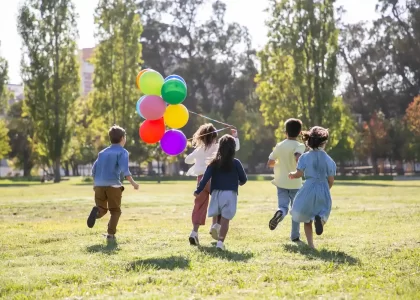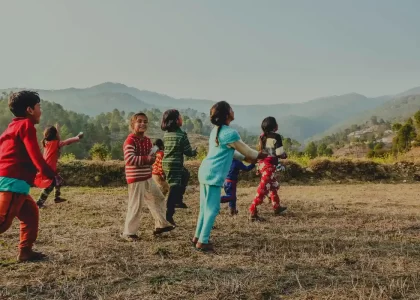

The application of **Cosmic Education** within the accelerated, high-contact structure of a **Cultural Exchange Montessori Camp** for **third-culture children** represents a critical pedagogical intervention against **identity fragmentation** and **cultural anomie**. The camp setting, while temporally limited, offers an ideal crucible for intense, guided social and cultural synthesis. The challenge lies in ensuring that the exposure to diverse cultures moves beyond a superficial “tourist” level to a deep, integrated understanding of shared human purpose, which is the core tenet of Cosmic Education. The Great Lessons must be presented with a deliberate emphasis on **historical and global pluralism**. For instance, the story of humanity should meticulously trace parallel developments in mathematics, art, and societal organization across multiple continents, intentionally decentering any single ethnocentric narrative. This creates a cognitive framework where the child’s own multi-cultural heritage is seen not as a set of competing fragments, but as an **inherent advantage**—a lens through which the global human story can be most clearly understood. The goal is to anchor their sense of self in a **metaphysical belonging** to humanity and the cosmos, rather than a transient, geographical location.
The **Cultural Exchange** component must be managed as a structured, collaborative process. Activities should be designed to necessitate **intercultural problem-solving**, forcing children from different backgrounds to negotiate, compromise, and integrate diverse skills to achieve a shared objective. Examples include building a functional model of a historically significant non-Western architectural structure or collaboratively staging a dramatic representation of a universal moral dilemma as interpreted by different cultures. The role of the guide is to be a **cultural hermeneut**—facilitating the dialogue and providing the **philosophical scaffolding** to move the discussion from surface differences (food, clothing) to deep-structure commonalities (the need for shelter, communication, and order). The **Grace and Courtesy** lessons in this context are expanded to include **cross-cultural communication protocols**, teaching children explicit strategies for managing misunderstandings arising from different norms of non-verbal language, personal space, and expression of emotion. This explicit instruction is vital for third-culture children who often lack the implicit cultural grounding of a monocultural peer group.
For the effects to be **sustained** beyond the camp’s duration, the final activities must focus on **identity synthesis**. Children should be guided to create a **personal cultural mosaic**—a concrete representation of how the new cultural narratives and global understanding integrate with their own complex background. This process of articulation and formalization helps to **internalize the sense of global belonging**, transforming the camp experience from a memory into a permanent **schema for self-identification**. This internalized schema—a robust, flexible, and pluralistic sense of self—is the ultimate safeguard against the psychological dislocation inherent in a globally mobile life, proving that a sense of **global citizenship** can be systematically constructed through intentional Montessori methodology. The short, intense period of the camp acts as a **high-pressure catalyst** for a developmental leap that might otherwise take years to achieve in an unguided, transient environment.