
Montessori education is one of the most respected and widely practiced educational approaches in the world. Developed by Dr. Maria Montessori in the early 1900s, this child-centered method focuses on fostering independence, creativity, critical thinking, and a genuine love for learning. Unlike traditional educational systems that often emphasize standardized instruction, Montessori classrooms are carefully designed to meet the developmental needs of each child, allowing them to learn at their own pace.
Today, Montessori education is embraced by schools across the globe because of its proven ability to help children develop academically, socially, emotionally, and intellectually. By creating an environment where children are encouraged to explore, discover, and take responsibility for their learning, Montessori education prepares students for success both inside and outside the classroom.
Understanding the Montessori Philosophy
The Montessori philosophy is based on the belief that children are naturally curious and capable of directing their own learning when provided with the right environment. Rather than acting as traditional instructors, Montessori teachers serve as guides who observe students and provide appropriate learning opportunities based on individual interests and developmental stages.
This educational approach respects each child as a unique individual. Children are encouraged to make choices, solve problems independently, and engage in meaningful activities that promote concentration and self-discipline. Through these experiences, students gain confidence and develop a strong sense of responsibility for their actions and learning outcomes.
The Prepared Environment
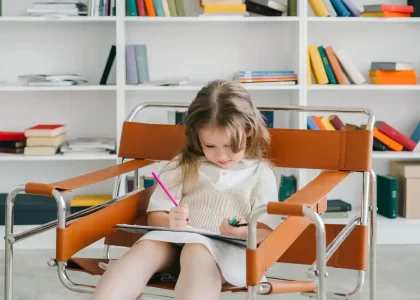
One of the defining features of Montessori education is the prepared environment. Every classroom is thoughtfully organized to support independent learning and exploration. Learning materials are displayed on accessible shelves, allowing children to choose activities that interest them.
The environment is designed to be orderly, inviting, and developmentally appropriate. Furniture is child-sized, and materials are arranged in a way that encourages movement and autonomy. This carefully prepared setting helps children develop organizational skills, self-control, and a sense of ownership over their learning experiences.
By providing freedom within structured boundaries, Montessori classrooms create a balance between independence and responsibility. Children learn to care for their surroundings while developing respect for others and the community around them.
Hands-On Learning Experiences
Montessori education emphasizes learning through hands-on experiences. Instead of relying primarily on textbooks and lectures, students interact with specially designed materials that help them understand abstract concepts through concrete experiences.
For example, mathematical concepts are introduced using manipulatives that allow children to physically explore numbers, quantities, and operations. Language development is supported through tactile materials that help children connect sounds, letters, and words. Science and cultural studies often involve experiments, exploration, and real-world observations.
These hands-on experiences make learning engaging and memorable. Children are able to discover concepts independently, which strengthens understanding and retention while fostering a deeper appreciation for learning.
Encouraging Independence and Responsibility
A major goal of Montessori education is to help children become independent learners. From an early age, students are encouraged to make choices, complete tasks on their own, and take responsibility for their actions.
Daily activities often include practical life exercises such as pouring, cleaning, organizing, and caring for plants. These tasks may seem simple, but they play an important role in developing coordination, concentration, and self-confidence.
As children master everyday responsibilities, they gain the confidence needed to tackle more complex academic and social challenges. This emphasis on independence helps students become capable problem-solvers who are prepared to navigate the demands of modern life.
Mixed-Age Classrooms and Collaborative Learning
Montessori classrooms typically group children across a three-year age span. This mixed-age structure creates a dynamic learning community where students learn from one another.
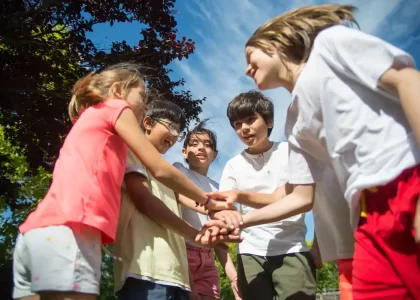
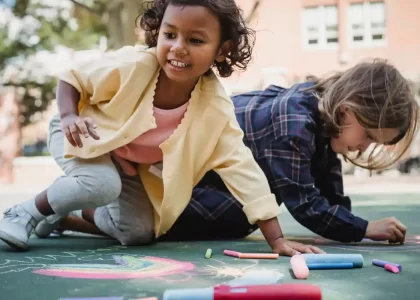
Younger children benefit from observing older classmates, while older students reinforce their own knowledge by mentoring younger peers. This natural exchange promotes cooperation, empathy, leadership, and mutual respect.
Unlike competitive educational environments, Montessori classrooms encourage collaboration rather than comparison. Students learn to appreciate individual strengths and recognize that everyone progresses at their own pace. This supportive atmosphere contributes to positive social development and emotional well-being.
Developing Critical Thinking Skills
Critical thinking is a cornerstone of Montessori education. Instead of simply memorizing information, students are encouraged to ask questions, explore possibilities, and seek solutions independently.
Teachers guide students through inquiry-based learning experiences that promote observation, analysis, and problem-solving. Children learn how to evaluate information, make connections between ideas, and apply knowledge in practical situations.
These skills are increasingly important in today’s rapidly changing world. By developing strong critical thinking abilities, Montessori students are better prepared to adapt to new challenges and opportunities throughout their lives.
Supporting Social and Emotional Growth
Montessori education places significant emphasis on social and emotional development. Children are taught to understand and manage their emotions while developing empathy and respect for others.
Classroom activities often involve cooperation, communication, and conflict resolution. Students learn how to work together effectively, listen to different perspectives, and contribute positively to their community.
This focus on emotional intelligence helps children build healthy relationships and develop the interpersonal skills necessary for future success. As a result, Montessori students often demonstrate strong self-awareness, resilience, and confidence.
Cultivating a Love for Learning
One of the most valuable outcomes of Montessori education is the development of intrinsic motivation. Because students are given the freedom to pursue their interests and learn at their own pace, they often develop a genuine enthusiasm for learning.
Rather than working solely for grades or external rewards, Montessori students learn because they are curious and engaged. This internal drive encourages lifelong learning and a positive attitude toward education.
When children experience the joy of discovery and achievement through self-directed learning, they become more confident in their abilities and more willing to embrace new challenges.
Preparing Children for the Future
The skills developed through Montessori education extend far beyond academic achievement. Independence, creativity, critical thinking, collaboration, and emotional intelligence are qualities that are highly valued in today’s world.
Montessori graduates often demonstrate strong leadership abilities, adaptability, and a willingness to take initiative. These characteristics help them succeed in higher education, professional careers, and personal relationships.
As society continues to evolve, the ability to think independently and learn continuously becomes increasingly important. Montessori education equips students with the mindset and skills necessary to thrive in a complex and interconnected world.
Montessori education offers a unique and effective approach to learning that respects the individuality of every child. Through prepared environments, hands-on experiences, mixed-age classrooms, and a focus on independence, Montessori schools help students develop the academic, social, and emotional skills needed for lifelong success.
By nurturing curiosity, responsibility, and a love for learning, Montessori education empowers children to become confident, capable, and compassionate individuals. Its enduring principles continue to inspire educators and families worldwide, making it one of the most influential educational approaches available today.