
In the landscape of early childhood education, few approaches have sparked as much interest and admiration as the Montessori method. Developed over a century ago, this philosophy continues to resonate deeply with parents and educators who seek a more holistic path for their children’s development. At the heart of this approach lies a profound respect for the child as a self-directed learner, capable of constructing their own understanding of the world. Unlike traditional models that often rely on rote memorization and teacher-led instruction, Montessori classrooms are vibrant communities where young learners are empowered to make choices, solve problems, and explore their interests at their own pace. This unique environment does not merely teach academic skills; it cultivates a lifelong love for learning and a robust sense of independence. By observing the natural tendencies of children, the Montessori method provides a framework that transforms education from a passive reception of information into an active, joyful pursuit of knowledge.
The Prepared Environment as a Catalyst for Independence
The cornerstone of fostering independent learning in a Montessori setting is the carefully curated “prepared environment.” Every element of the classroom, from the height of the shelves to the arrangement of materials, is designed with the child’s autonomy in mind. The furniture is child-sized, allowing students to access and put away materials without adult assistance. This simple yet profound design choice sends a powerful message to the child: you are capable, and this space belongs to you. The materials themselves are self-correcting, meaning that a child can see for themselves if they have completed a task correctly, without needing a teacher to validate their work. For instance, if a child is working with a cylinder block and places a cylinder in the wrong hole, it will not fit. This immediate feedback loop encourages children to rely on their own judgment and persevere through challenges. They learn to trust their own perceptions and develop the confidence to attempt difficult tasks without fear of failure. This autonomy extends beyond the materials to the daily routine of the classroom. Children are responsible for preparing their own snacks, cleaning up spills, and tending to classroom plants. These practical life activities are not chores but essential exercises in independence that build fine motor skills, concentration, and a sense of responsibility toward the community.
Nurturing Creativity Through Unstructured Exploration
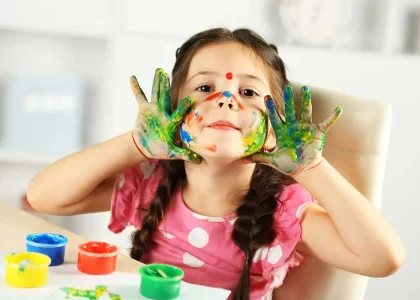
While Montessori education is often associated with structure and order, it is, paradoxically, a powerful engine for creative thinking. Creativity flourishes when children are given the freedom to explore and the space to experiment without constant adult interference. In a Montessori classroom, there are no mandatory art projects where every child creates the same identical craft. Instead, art is integrated into the environment as a means of self-expression. Children have access to a variety of art supplies and are encouraged to use them whenever they feel inspired. This freedom allows them to explore colors, textures, and forms in a way that is personally meaningful. Furthermore, creativity is not limited to art; it is woven into every aspect of the curriculum. The open-ended nature of many Montessori materials encourages divergent thinking. A set of wooden blocks can be used for building a tower, sorting by size, or creating a pattern. When children are given the agency to choose their work, they engage with it more deeply, often discovering novel ways to use the materials that the adult might not have anticipated. This type of play is essential for developing the cognitive flexibility required for creative problem-solving later in life. By valuing process over product, Montessori education teaches children that their ideas have worth and that there are multiple ways to approach a problem.
The Role of the Guide in Supporting Autonomous Choices
In this dynamic educational ecosystem, the teacher’s role shifts dramatically from the traditional “sage on the stage” to that of a “guide on the side.” The Montessori guide is a keen observer who watches the children to understand their individual needs and interests. Rather than dictating what every child must do and when, the guide presents lessons to small groups or individuals based on their developmental readiness. This personalized approach ensures that a child is neither bored nor overwhelmed but is always working at their own unique cutting edge of learning. The guide’s intervention is subtle and supportive, designed to spark interest without taking over the activity. For example, a teacher might notice a child struggling with a pouring exercise and quietly demonstrate how to hold the pitcher steadier, then step back to let the child try again. This respectful guidance empowers the child to own their learning process. It teaches them that seeking help is a natural part of learning, but ultimately, the satisfaction of mastery comes from their own efforts. By fostering a relationship based on trust rather than authority, the guide helps children develop the emotional security they need to take risks, ask questions, and think independently. This supportive relationship is the bedrock upon which the child’s intellectual and emotional growth is built.