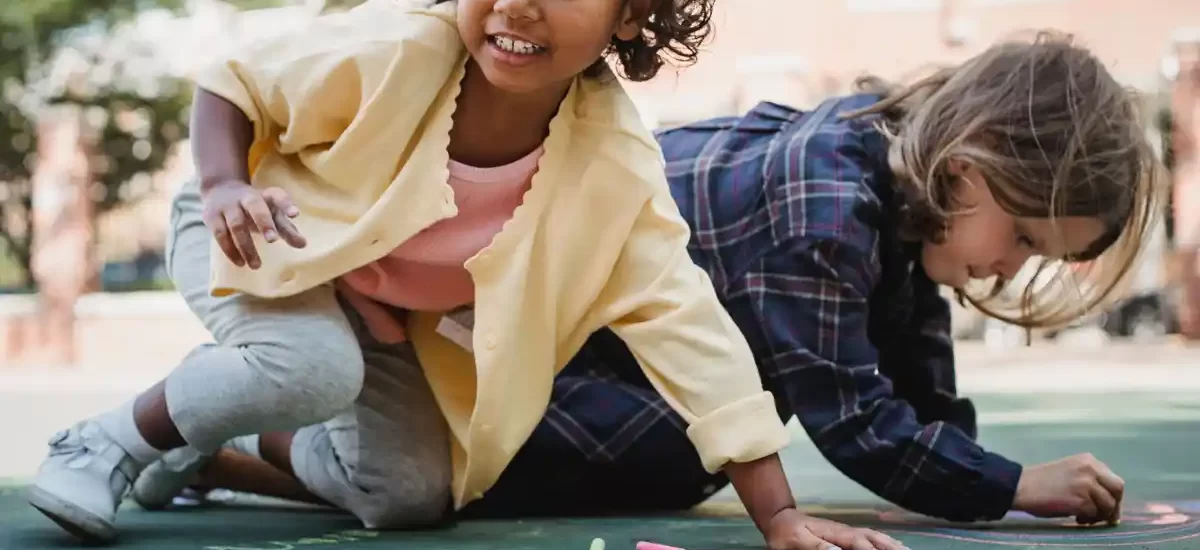
The integration of the natural world into a child’s daily educational experience is not merely a luxury or a break from the classroom, but a fundamental component of holistic development that has been observed and championed by educators for over a century. When we step outside the traditional four-walled environment, we open the door to a sensory-rich, dynamic classroom that changes with the seasons and the weather, offering limitless opportunities for spontaneous discovery and deep engagement. This connection to the outdoors is vital for Early Childhood Brain Development, as the unstructured nature of the outdoors provides a unique type of sensory stimulation that indoor environments, no matter how well-designed, simply cannot replicate. The rustling of leaves, the uneven texture of the ground, the shifting light, and the vastness of the sky all contribute to a complex sensory diet that strengthens neural pathways and supports the architecture of the developing brain.
The Neuroscience of Nature-Based Learning
Current research into Environmental Awareness Education consistently highlights the reduction of cortisol levels and the restoration of attention in children who spend significant time in green spaces. The concept of “attention restoration theory” suggests that natural environments engage the mind effortlessly, allowing the cognitive mechanisms responsible for directed attention to rest and rejuvenate. This is particularly relevant in our modern, fast-paced world where children are often overstimulated by screens and structured activities. By engaging in Nature-Based Learning Benefits, children are able to reset their mental focus, which subsequently enhances their ability to concentrate when they return to more structured tasks. Furthermore, the unpredictable and varied nature of the outdoors necessitates constant decision-making and risk assessment, which are high-level executive functions. Navigating a slippery log or deciding how high to climb a tree requires a child to assess their physical capabilities and the environment in real-time, thereby sharpening their Executive Function Development. These are not just physical actions; they are complex cognitive processes that lay the groundwork for problem-solving and adaptability later in life.
In addition to executive function, the exposure to natural light and fresh air plays a critical role in physiological regulation. Natural light is essential for the regulation of circadian rhythms, which in turn affects sleep patterns, mood, and alertness. A child who spends ample time outdoors is more likely to have restorative sleep, which is when the brain consolidates learning and memory. The openness of the outdoors also allows for vigorous physical activity without the spatial constraints often found indoors. This freedom of movement is inextricably linked to Gross Motor Skill Development. Running, jumping, climbing, and balancing are all activities that strengthen the core, improve coordination, and enhance spatial awareness. These large muscle movements are foundational for fine motor skills required later for writing and detailed work. The proprioceptive and vestibular systems—our senses of body position and balance—are heavily engaged through outdoor play, leading to better posture and sensory integration.
Fostering Environmental Stewardship and Global Citizenship
Beyond the immediate cognitive and physical benefits, outdoor learning serves as a powerful vehicle for Character Education and the development of a sense of responsibility towards the planet. When children interact directly with nature—planting seeds, observing insects, or collecting leaves—they develop a personal relationship with the environment. It is difficult to care about something one has never touched or observed. This hands-on interaction fosters a deep-seated respect for living things and an understanding of ecological systems that cannot be conveyed through textbooks alone. Children learn that their actions have consequences; they see that a plant needs water to grow or that littering harms the wildlife they observe. This realization is the first step toward becoming a responsible global citizen. By engaging in activities such as gardening or composting, children participate in cycles of growth and decay, learning valuable lessons about patience, cause and effect, and the interdependence of all living things.
This connection to the earth also supports Cultural Awareness and Global Citizenship by helping children understand their place in the larger web of life. In an international education context, nature is a universal language. A child in one country observes the same laws of physics and biology as a child in another, creating a shared framework for understanding the world. Discussing how different cultures utilize plants for medicine, food, or shelter can be woven into outdoor experiences, broadening the child’s perspective and fostering an appreciation for diversity. Moreover, the collaborative nature of many outdoor projects, such as building a fort or tending to a class garden, encourages Collaboration and Teamwork Skills. Children must communicate, negotiate roles, and work together toward a common goal, learning that their contribution is vital to the success of the group. These social interactions in a less structured, more open environment often allow children who might be more reserved indoors to step forward and demonstrate leadership or creative problem-solving abilities.
Integrating Physical and Cognitive Challenges Outdoors
The outdoors is arguably the best setting for Experiential Learning Methods, where abstract concepts become concrete realities. Mathematical thinking, for example, can be explored through natural loose parts. Sorting pebbles by size or shape, creating patterns with leaves, or measuring the growth of a plant introduces children to classification, seriation, and measurement in a meaningful context. This type of inquiry-based learning promotes Mathematical Thinking Development without the pressure of formal instruction. Children are naturally motivated to count and compare when the objects are real and interesting to them. Similarly, scientific inquiry is brought to life through direct observation. Instead of reading about the life cycle of a butterfly, a child can observe caterpillars in the garden, watch them form chrysalises, and eventually witness the emergence of the butterfly. This direct engagement cultivates Scientific Inquiry Skills and encourages a mindset of curiosity and observation that is the hallmark of a lifelong learner.
Furthermore, the landscape itself presents constant opportunities for enhancing Creative Thinking Enhancement. A stick can become a magic wand, a sword, or a tent pole. A pile of sand can transform into a mountainous landscape or a construction site. This open-ended play is essential for Cognitive Development in Young Learners, as it requires them to manipulate abstract ideas and symbols. Unlike many toys with a single predetermined function, natural materials are open-ended, requiring the child to impose their own structure and narrative upon them. This strengthens their imagination and their ability to think divergently. The physical challenges presented by the outdoors also contribute significantly to Resilience and Adaptability Building. A child who struggles to climb a rock wall and eventually succeeds after several attempts learns that effort leads to improvement. They learn to manage frustration and celebrate small victories. This “growth mindset” is cultivated through the tangible, physical challenges that are abundant in nature. By facing these challenges in a safe and supportive environment, children build confidence in their physical abilities and, by extension, their ability to overcome obstacles in other areas of their lives.